Newest Products
How to choose Incremental Rotary Encoders
Incremental Rotary Encoder Selection Guide for Engineers and Automation Professionals
The selection of an incremental rotary encoder directly shapes your industrial automation project’s accuracy, responsiveness, and reliability. This targeted guide focuses on engineering best practices, technical considerations, and long-tail queries for high-intent discovery.
Here are the following parameters that you need to take care of:
Define Your Application Requirements
- Precision Needs: Choose the required pulses per revolution (PPR) or cycles per revolution (CPR). For most general automation, 100-1024 PPR suffices; high-precision CNCs may demand 2500+ PPR.
- Speed & Direction: Incremental encoders offer fast signal response, making them ideal for dynamic speed and direction tracking in motors, conveyors, and pick-and-place systems.
Mechanical Fit & Mounting Constraints
- Shaft Type: Select between round shaft and hollow shaft models based on mechanical integration. Compact, miniature variants are available for tight spaces.
- Permitted Shaft Load: Evaluate load ratings to ensure long-term reliability.
- Mounting Simplicity: Verify bracket and coupling compatibility with your machine setup.
Electrical & Interface Selection
- Signal Output: Opt for open collector, voltage, or line driver outputs based on noise environment and controller input requirements.
- Channel Options: A/B (quadrature) channels provide direction and speed; a Z (Index) channel is vital for reference/homing.
- Maximum Response Frequency: Confirm that the encoder’s maximum frequency covers your application’s top RPM × resolution/60. Always select a model with margin beyond your calculated maximum.
Environmental Protection
- IP Rating: For dust-only environments, IP50 works. For oil, water, vibration, or washdown, seek models rated IP64 or higher.
- Durability: Consider application-specific ruggedness, such as oil-resistant designs for packaging or machining processes.
Calibration and System Integration
- Homing Requirements: Remember, incremental encoders require a homing routine on startup. If zeroing at power-on is acceptable, incremental saves cost and complexity over absolute types.
- Interchangeability: The widespread use of incremental encoders ensures easy sourcing and replacement, often without major system rework.
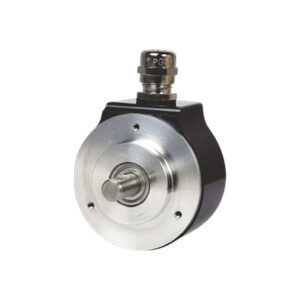
Table: Engineer’s Quick Selection Criteria for Incremental Encoders
| Parameter | Key Engineer Questions | Typical Ranges/Options |
| PPR/CPR | What resolution is required? | 100–10,000+ |
| Output Type | What input can your controller read? | Line driver, open collector, voltage |
| Shaft Type | What mounting fits your build? | Round, hollow, blind |
| Channels | Need indexing/homing? | A/B, A/B/Z (Index) |
| IP Rating | Environmental hazards? | IP50–IP67 |
| Max Speed/Frequency | What’s the fastest RPM? | Up to 6000+ RPM |
Meta Description (SEO)
Discover how to choose the best incremental rotary encoder for automation projects. Engineers’ guide covers resolution, output options, durability, and practical application tips for high-performance feedback systems.
Actionable CTA
Ready to upgrade your feedback system? Consult our distribution specialist or explore our industrial catalog for compatible incremental rotary encoders with in-stock options, application support, and fast delivery!